
2012-04-29


2012-04-25
The counterculture be damned!

...our notion about what’s wrong with American life and how the figures responsible are to be confronted haven’t changed much in thirty years. Call it, for convenience, the “countercultural idea.”... As this half of the countercultural idea originated during the 1950s, it is appropriate that the evils of conformity are most conveniently summarized with images of 1950s suburban correctness. You know, that land of sedate music, sexual repression, deference to authority, Red Scares, and smiling white people standing politely in line to go to church.... The ways in which this system are to be resisted are equally well understood and agreed-upon. The Establishment demands homogeneity; we revolt by embracing diverse, individual lifestyles. [...]
Go to any poetry reading and you can see a string of junior Kerouacs go through the routine, upsetting cultural hierarchies by pushing themselves to the limit, straining for that gorgeous moment of original vice when Allen Ginsberg first read “Howl” in 1955 and the patriarchs of our fantasies recoiled in shock. ... But one hardly has to go to a poetry reading to see the countercultural idea acted out. Its frenzied ecstasies have long since become an official aesthetic of consumer society, a monotheme of mass as well as adversarial culture. [...]
Corporate America is not an oppressor but a sponsor of fun, provider of lifestyle accoutrements, facilitator of carnival, our slang-speaking partner in the quest for that ever-more apocalyptic orgasm. The countercultural idea has become capitalist orthodoxy, its hunger for transgression upon transgression now perfectly suited to an economic-cultural regime that runs on ever-faster cyclings of the new; its taste for self-fulfillment and its intolerance for the confines of tradition now permitting vast latitude in consuming practices and lifestyle experimentation. Consumerism is no longer about “conformity” but about “difference.” Advertising teaches us not in the ways of puritanical self-denial (a bizarre notion on the face of it), but in orgiastic, never-ending self-fulfillment. It counsels not rigid adherence to the tastes of the herd but vigilant and constantly updated individualism. We consume not to fit in, but to prove, on the surface at least, that we are rock `n’ roll rebels, each one of us as rule-breaking and hierarchy-defying as our heroes of the 60s, who now pitch cars, shoes, and beer.
Thomas Frank wrote the above in 1995 and very, very little has changed. Capitalism can make a profit from people fucking like dogs in the street, and use those profits to oppress people, just as long as those people keep going to work (or running their small businesses) once the hangovers wear off. This is what you get from dismissing the labour theory of value, and the consecutive belief that consumption choices are political. And that's why all those great "majickians" got jobs as advertising copywriters, why Grant Morrison now writes superhero comics, and they probably think that that's liberation.
Sorry if I seem too combative, but I was always an "outsider" to the great counterculture of the 90's and early Aughties. I didn't get invited to those parties, I couldn't afford those clothes or books, I wasn't offered those good drugs. I was the person who got rejected by the cool mainstream kids AND the cool alternative kids. So it's a little bit schadenfreudlich to see what happened.
2012-04-23
The "held-down-7" model

Chaos Marxism declares that the goal of revolutionary politics is to reconcile the material and the ideological/cultural/spiritual; this world and the next. It distinguishes itself from "false liberation" ideologies, which tend to combine mechanical materialism and the most rank superstitious idealism, and never the twain shall meet.
Stalinism was the Platonic model (heh) of this. "Mechanical materialism" - a hard belief in "management by statistics", in belief of overproduction of tractor factories and Sputniks as the road to social progress - went hand in hand with "voluntarist idealism" - the idea that you could achieve the objectively insane production quotas with enough revolutionary will, and anyone who didn't have that kind of will was a traitor subject to police action. Amazingly enough, this is precisely how the Church of Scientology works, as its schismatics argue. Hubbard theorised the spirit as an immortal being which wasn't bound by the laws of matter/energy/space/time, and simultaneously the mind as a mechanical computer in which every problem boiled down to a "stuck key". Of course, the mind/body/spirit is an internally contradictory complex living system with emergent properties. All words that weren't in common usage in the 1950s, but Uncle Joe and Foul Ole Ron thought they were the ultimate authorities on everything.
Modern consumer capitalism has at least the benefit that it competes against itself so superstition and inefficiency tend to be self-limiting in the field of production, although actively encouraged in the field of consumption. But we still have the "management by stats" - the worship of economic growth, the commodification of everything and the race to the bottom in workers' rights and conditions - at the same time it preaches The Secret, the Prosperity Gospel, and all the other lies that those bad things are happening to ungoodthinkful people. Please note that whenever a Newspeak word is appropriate, things must be really bad.
===
In personal news, once again actual practice has forced me to backtrack against some of my own "mechanically materialist" formulations in the realm of psychology. Seriously, I used to believe that my ideal scene was to transform myself into some cross between a Dianetic Clear and Mr Spock - never having anger, fear or other misemotion ever again. The works of Brad Warner have done great things in convincing me that this is an insane fantasy, that the truly enlightened continue to have human problems and human emotions until the day of their death. Enlightenment lies, as far as I can see, in being emotional or rational in accordance with what IS, rather than mental image pictures, "shoulds", ideological measuring sticks, etc. You can pick the woman up as long as you put her down again.
2012-04-12
Crimes, cults, karma
Foul Ole Ron said "the only way to control people is to lie to them", which is pretty much accurate. (Most of what he said in the 1950s was accurate in the sense of being a common-sense psychological or spiritual truism. He even warned his followers "if Scientology turns into a mind-control cult it could screw over the whole planet". The extent to which his practice degenerated to the point where he became what he warned against may be the subject of a later post.) But let's expand that to: the only way to enslave someone is to get them to commit crimes.
That's how cults work. The way you ensare someone is to take away their "self-determinism" - get them to violate their own principles, goals, values and ethical system, on the grounds that the greater glory of The Group justifies whatever means. And at that point they realise that if they ever leave the group, they will have to answer for their crimes in the real world, who will not take "we were only following orders" for an answer. Look at the way that Jack Barnes corrupted and destroyed Barry Sheppard by making him do his dirty work.
I've read an argument - I think it was by Alex Callinicos - that that was the real motivation of the Holocaust. The Nazis knew perfectly well that they were committing the worst crime against humanity ever. But that was how they were going to blackmail the German people into fighting to the bitter end. Note that the mass killings of Jews only happened after Stalingrad. Before then, the purpose of the concentration camps was to degrade the Jews to the point where they actually became the snivelling subhumans that Nazi ideology proclaimed them to be. But the murder machines started up, according to this analysis, so that then the Nazis could turn to their subject populations and say - in the immortal words of Bender B. Rodriguez - "Hey! Guess what you're accessories to!"
Law enforcement know this very well, which is why we have the concept of "turning states' evidence" - we will forgive your crimes if you strike a blow at your former group. But then law enforcement's goal is to shut down criminals and groups of criminals. When you're dealing with other groups of people who have a highly developed sense of "right and wrong", or are crusading against something as unreal as an idea, they will tend to turn on renegades from their enemy because at least that's something they can punish. As Marty Rathbun is sadly finding out. Anti-Scientologists are (a) disinclined to forgive him for the crimes he committed due to his former allegiance to a psychopathic leadership; (b) against the idea of Scientology rather than the crimes committed in its name.
2012-04-03
Sure I'm shaking in my shoes as I'm sending out the news
It sickens me to link to the Daily Mail, aka the Daily Heil, but this argument about how CBT is not therapy is very interesting. The argument is basically that CBT patches up the symptoms of mental illness well enough to get you back to work but doesn't actually deal with the sources of the problem. I would suggest that this may be the case for "official" applications of CBT, as the British NHS are doing; but the CBT workbook that I'm using in my personal practice works, as the Scientologists put it, "on a gradient", in that the first part is the kind of psychological first aid / meatball surgery to which Dr James refers, but the second part actually looks at the sources of character aberration (Rules for Living, Bottom Line), which I have found by far the most interesting and useful.
Really, all that "therapy" is, in this regard, is teaching the subject to look at her own mind (habitual patterns of thought and behaviour) objectively, or as the Sufis put it "with the eyes of sincerity and truth". This means an "exteriorising" from the habitual patterns of the ego, which has evolved to survive as best one can in the specific circumstances of growing up - which is why, as Dr James correctly states, learning to look at bad things from your childhood is very important. (The therapist or spiritual guide can serve as a "temporary point of objectivity" until you have your own objectivity, which is why "doing it yourself", or without someone whom you really trust, is much, much harder.) And all this is, CM argues, precisely identical to the Marxist notion of the working class evolving into consciousness of their own real interests and out of dependence on capitalist ideology.
But surely CBT has a point that the first priority should be to stop your ego making things worse for you in the here-and-now? CBT and Marxism agree that consciousness evolves through self-activity. The problem with the past is that it is past, you can't change it, you can only learn to accept it for what it is. But acceptance of past and present reality also means responsibility for your actions in the now, your ability to create the future. If you can't actually take responsibility for everything you do - if you believe that you have to keep making things worse because of bad things that happened when you were little, or that the planet is doomed because capitalism has screwed everyone up beyond redemption - then you really do need someone else making your decisions for you. We make the new world, we make our new selves, with the flawed material we have.
On this subject, I'm also intrigued by the argument that CBT is "un-British" in that it valorises "American" goals such as positive thinking and going for goals. This is a nationalist version of the Marxist argument made in this article, which is quite gobsmacking and shows that some academic leftists are taking the concerns of CM seriously now. The authors' point that Freudian psychoanalysis evolved in an era where the abiding psychic problem of the bourgeoisie was neurosis and guilt, but that these days the representative symptom is depression, really bears further exploration. Depression basically boils down to an incapacity to work or consume properly, which means that you're not doing your job as a subject of capitalism.
So the argument is that "positive thinking" really means "trying to make you fit into the machinery of the Black Iron Prison". So... what is the alternative? I've talked about this before - if you understand that the goals of working hard so you can make big money so you can spend it on leisure items are False Goals implanted by The Bad Guys and there's no real point to it - what do you do then? One of the major problems with actual-existing radical groups is that they end up acting just like capitalist workplaces. Bill Logan used to use bourgeois management-training programmes in his Trotskyist grouplet, or so former members tell us. Tony Cliff said "to defeat an enemy you must be symmetrical to it", but does that mean that revolutionary parties are supposed to exploit the labour-power of their cadres, to expect (as James Cannon did) the cadre to achieve all their personal fulfilment in work/leisure activities endorsed by The Party? Is this not a precise analogy to the "introjection" of traumatising personalities into the psyche - your mother screamed at you so you grow up learning to scream at yourself?
Too many committed revolutionaries are forced out of active politics by political groups which unthinkingly replicate the productivist logic and the "you should be happy doing THIS" moralism of late capitalism. Those who want a new world have to learn to marry dialectical materialism and "metapsychology"/non-dualist spirituality. We have to understand that since our practice creates the new world, we need to be objective from our personal and collective practice. We have to remember that patterns of belief and behaviour which enable the ego/group to survive in a harsh world can be precisely counterproductive to self-actualisation/creating real political change. Loving-kindness is truly revolutionary practice - anything else is creating a new boss who will be the same as the old boss. The discipline of the barracks or of the capitalist workplace have no place in our movement.
Grazie mille to Comrade Seymour for publishing the article which led me to these links.
Really, all that "therapy" is, in this regard, is teaching the subject to look at her own mind (habitual patterns of thought and behaviour) objectively, or as the Sufis put it "with the eyes of sincerity and truth". This means an "exteriorising" from the habitual patterns of the ego, which has evolved to survive as best one can in the specific circumstances of growing up - which is why, as Dr James correctly states, learning to look at bad things from your childhood is very important. (The therapist or spiritual guide can serve as a "temporary point of objectivity" until you have your own objectivity, which is why "doing it yourself", or without someone whom you really trust, is much, much harder.) And all this is, CM argues, precisely identical to the Marxist notion of the working class evolving into consciousness of their own real interests and out of dependence on capitalist ideology.
But surely CBT has a point that the first priority should be to stop your ego making things worse for you in the here-and-now? CBT and Marxism agree that consciousness evolves through self-activity. The problem with the past is that it is past, you can't change it, you can only learn to accept it for what it is. But acceptance of past and present reality also means responsibility for your actions in the now, your ability to create the future. If you can't actually take responsibility for everything you do - if you believe that you have to keep making things worse because of bad things that happened when you were little, or that the planet is doomed because capitalism has screwed everyone up beyond redemption - then you really do need someone else making your decisions for you. We make the new world, we make our new selves, with the flawed material we have.
On this subject, I'm also intrigued by the argument that CBT is "un-British" in that it valorises "American" goals such as positive thinking and going for goals. This is a nationalist version of the Marxist argument made in this article, which is quite gobsmacking and shows that some academic leftists are taking the concerns of CM seriously now. The authors' point that Freudian psychoanalysis evolved in an era where the abiding psychic problem of the bourgeoisie was neurosis and guilt, but that these days the representative symptom is depression, really bears further exploration. Depression basically boils down to an incapacity to work or consume properly, which means that you're not doing your job as a subject of capitalism.
So the argument is that "positive thinking" really means "trying to make you fit into the machinery of the Black Iron Prison". So... what is the alternative? I've talked about this before - if you understand that the goals of working hard so you can make big money so you can spend it on leisure items are False Goals implanted by The Bad Guys and there's no real point to it - what do you do then? One of the major problems with actual-existing radical groups is that they end up acting just like capitalist workplaces. Bill Logan used to use bourgeois management-training programmes in his Trotskyist grouplet, or so former members tell us. Tony Cliff said "to defeat an enemy you must be symmetrical to it", but does that mean that revolutionary parties are supposed to exploit the labour-power of their cadres, to expect (as James Cannon did) the cadre to achieve all their personal fulfilment in work/leisure activities endorsed by The Party? Is this not a precise analogy to the "introjection" of traumatising personalities into the psyche - your mother screamed at you so you grow up learning to scream at yourself?
Too many committed revolutionaries are forced out of active politics by political groups which unthinkingly replicate the productivist logic and the "you should be happy doing THIS" moralism of late capitalism. Those who want a new world have to learn to marry dialectical materialism and "metapsychology"/non-dualist spirituality. We have to understand that since our practice creates the new world, we need to be objective from our personal and collective practice. We have to remember that patterns of belief and behaviour which enable the ego/group to survive in a harsh world can be precisely counterproductive to self-actualisation/creating real political change. Loving-kindness is truly revolutionary practice - anything else is creating a new boss who will be the same as the old boss. The discipline of the barracks or of the capitalist workplace have no place in our movement.
Grazie mille to Comrade Seymour for publishing the article which led me to these links.
2012-04-02
Aphorism on goals
If, as various spiritual traditions suggest:
1) life in this $2.99 Material World is a "game" which we consented to in the pre-life area;
2) beings adopt "pretence identities" and "substitute goals" when they feel that they've failed at the Game of Life:
then (aphorism time) the Game of Capitalism can be seen as a substitute for the Game of Real Life. As Marx said, the Game of Life (or History) only begins properly when the Game of Capitalism ends, assuming we still have an ecosystem conducive to advanced human civilisation by then.
1) life in this $2.99 Material World is a "game" which we consented to in the pre-life area;
2) beings adopt "pretence identities" and "substitute goals" when they feel that they've failed at the Game of Life:
then (aphorism time) the Game of Capitalism can be seen as a substitute for the Game of Real Life. As Marx said, the Game of Life (or History) only begins properly when the Game of Capitalism ends, assuming we still have an ecosystem conducive to advanced human civilisation by then.
Left hand, right hand, Aleister, Ron
This from the comments thread to this post by Village Voice editor Tony Ortega. For those not aware, Marty Rathbun was previously the 2nd-in-charge of the Church of Scientology, and he has since split from that organisation, denounced its leader David Miscavige betraying the legacy of its Founder and running slave-labour camps, and is attempting to start his own Scientologist International, with blackjack, and hookers, and e-meters. (So, these guys are to the Tom Cruise church what Protestants are to Catholics, or Trots are to orthodox Communists.)
I post this as a counterbalance to my recent positive-sounding ruminations on Rathbun's independent Scientology. I think perhaps my ego continues to have a sneaking regard for the subject because it would love to, as Scientology promises, be able to solve all its own problems using rationalism and without surrender. However, I am still intrigued by what seem surface similarities between Scientology and Cognitive Behavioural Therapy - in that both claim to be able to "deprogramme" the subconscious mind by extracting, looking at and then "as-is"ing rules of behaviour and assumptions about reality. This "tech" doesn't require an empathic or transference relationship with a therapist, only someone to guide the patient/preclear's self-analysis, a job which can be equally well done by a computer.
Other points: given the points raised about Ron's insane bullshit auto-hagiography, others have pointed out that this is yet another link showing his debt to Crowley. Thelemites have often argued with me that Uncle Al did that deliberately - throwing insane grandiose lies into his writings just to see who'd be enlightened enough to realise they were bullshit. I don't credit Ron with that much self-insight. I also note the points made by other commenters on this thread that Rathbun seems much more interested salvaging those people damaged by the Miscavage/Cruise regime than repackinging "LRH tech" for the broad masses.
===
ETA:
One thing that the Scientology Cult fears the most is that the common-sense parts of what is called "auditing" - which exclude trickery and coercion, and exclude subtle psychological manipulation and overwhelm, such as found in the Auditor-Code-violating "Implantology levels" - be recognized and used in a free fashion by independent counselors.===
I have to think Rathbun must be a little frustrated at his current predicament. He is trying to defend a subject which is indefensible. I
do agree with his premise that Miscavige is doing all in his power to
portray Hubbard as a fraud. Fortunately, I did not watch the entire
three hour video extravaganza that is the 2012 birthday celebration.
Three hours is a long time for decent movie and the thought of watching
and listening to the dropout dwarf and mullet head for that time would
no doubt lead me to at least suicide ideations, if not attempts.
The words of LRH [L. Ron Hubbard] go beyond "tall tales" and amount to fraud.
Recently, someone asked me why or how anyone would ever get involved in
this cult? My response was simply ego. It is a religion marketed on the
promise that their "tech" can solve each and every problem-emotional and
physical-that plagues the initiate. The promise of immortality and
super powers are powerful motivators for the vainglorious with large
amounts of disposable income. These dupes are secure in their belief
that the large donations made by them will ultimately contribute to
their further success and give the the "super power" that they know LRH
possessed. Absent in this fraudulent conduct is any "science" to back up
their ridiculous claims. When challenged on this point, they point to
faith.
2012-03-27
Sturm & Drang (or: back to psychology)

Chaos Marxism Aphorism #1 is: you are what you do. (I just found out the other day that this is also a lyric from a KMFDM song, cool beans.) And what you do is about 80-90% habit and conditioning, the power of which "it is difficult to exaggerate" (R. Fripp). It's just more efficient to run on automatic, even though you become half-ape and half-robot instead of a human being.
You can't change "what you are" - your wants, needs, desires, likes, dislikes, etc. - in any direct sense because you don't have the kind of objectivity necessary. "The only thing more powerful than the human mind is the human ego" (I. Stang). But your habits and conditioned reflexes are learned in the process of daily life - problems are usually solutions to previous problems (Hubbard) and if you kneel in the same place and recite the same prayers for long enough you will believe in God (Althusser).
And it is possible to do so consciously, as an act of will - you can change, first, your conscious choices of behaviour; and, secondly, learn to notice your habits and conditioned reflexes, at which point you can begin "reprogramming" them gradually, using magick or Cognitive Behavioural Therapy or psilocybin or Scientology or revolutionary political struggle, whatever's most convenient at the time. Of course, you can only do this through practice, which - when we translate this into politics - means that simply lecturing the workers about how they and the boss class has nothing in common will just get them pissed off at you. To do any good, your activism must have practical suggestions for the here and now which reinforce your goal-message.
Perhaps "you cannot walk the path without a Master" (Rumi) because the Master offers a necessary "stable datum amid confusion" (Hubbard) to act as a truly objective reference point. And to be a stable datum you must submit to that stable datum absolutely, no matter whether it's actually "good" in any objective sense. This is why "any act based on principle is a good one" (R. Fripp), and why some people have even got positive results from the teachings of Joseph Smith or Bhaghwan Shree Rajneesh. But eventually the goal would be to "find the Master (or the hero) inside yourself" - uncover the heart as an internal stable datum, not the endlessly fickle feline ego/nafs.
The Scientology goal of "clearing the reactive mind" - i.e. having no habits or conditioned reflexes - seems foolish. Imagine if you had to remember to breathe, as apparently some psychonauts have ended up doing to themselves. No, the more feasible goal is to be fully conscious of all your habits, and edit them in accordance with Love and Will.
Couple of fun readings for you: my old buddy Michael Lebowitz argues against John Holloway that you have to struggle against the Black Iron Prison, not just opt out of it, since only struggle makes it possible for you to learn to live outside a prison cell (see above); and our favourite junkie queer literary genius William S. Burroughs reminds us that, at one point in the past, cool people like himself and Leonard Cohen were attracted by L. Ron's research project.
(Note by those offended by the positive references to Scientology teachings and concepts: L. Ron Hubbard was a massive plagiarist and of course even a blind squirrel finds a few tasty nuts once in a while, and it's those "tasty nuts" that Independent Scientologists are interested in promoting, rather than that bat-shit crazy stuff about Xenu or the fascist antics of the existing "Church" run by pope-on-a-box David Miscavige.)
2012-03-25
We interrupt this programme...

I just received this email via an electric bicycle forum, would you believe.
Ah, Anon. If only revolution - of the kind which really changes things, as opposed to "colour revolution / meet the new imperialist-approved puppet, same as the formerly imperialist-approved puppet" were that simple. But I must say this is exciting and I'm looking forward to seeing what happens.Dear Anonymous, The purpose of this message is to inform you about the Revolution: OCCUPY HOUSES OF PARLIAMENT IN LONDON ON NOVEMBER 5, 2012. OCCUPY CONGRESS IN WASHINGTON D.C. ON NOVEMBER 11, 2012. STOP WAR. CANCEL ALL DEBT. REDISTRIBUTE WEALTH. Please, watch the "Nazi Banksters' Crimes Ripple Effect" movie to find out why, how, and to have sound arguments to persuade others. The movie can be easily found with a search engine. Please, print the flyers at 2012jubilee.info and distribute them. Please, spread this message and the movie to everyone you know. -Anonymous
I think people of the future will realise what a huge impact the Wachowski siblings have had on the culture of the Internet age. Everyone knows what The Matrix (the original movie) did - pretty much bring Gnostic/Buddhist ideas into the mainstream - but V for Vendetta, even though it was a pretty craptacular rewrite of Alan Moore's excellent graphic novel, and it embraces conspiracy theories in quite a reactionary manner, gave birth to Anonymous as a political project.
2012-03-20
Mike Ely is a good guy
When I started writing stuff like this five-and-a-half years ago, I did so under a pseudonym because I anticipated the gales of mocking, condescending laughter from the tough-guy RRRRRevolutionaries who knew that only ideas and words were important and soft, fuzzy stuff like "culture" and "emotion" could be left to fend for itself, if not an actual impediment to the struggle. But perhaps the time has now come.
Anyway, follow the Kasama Project - they come from a Maoist tradition, we were originally Trots, but the Truth Is One and all those who sincerely seek the Truth Are One.
Anyway, follow the Kasama Project - they come from a Maoist tradition, we were originally Trots, but the Truth Is One and all those who sincerely seek the Truth Are One.
2012-03-03
And it's a big ZDRAVO...
... to our new Croatian-speaking readers. I have quite a good friend who supports Hajduk Split.
2012-03-02
A correction (a cat is fine too)

Some readers from the Discordian community have expressed dissatisfaction with certain formulations I've made in the past, and with my vague comments that "I don't necessarily stand by everything I've said here over 5 and a half years". So it gives me pleasure to actually be able to stand up and correct/disavow an incorrect formulation in one of my "primer" texts. I quote from "The One Key and Nine Commitments of CM":
On the micro-level, Chaos Marxism stands for the ruthless "obedience training" of the ego. Imagine that your ego is a badly trained dog - it barks when not necessary, it requires far more attention than it really needs, it humps your leg or otherwise annoys you when you're trying to do something. But you don't need to take it out and shoot it, you just need to teach it that its perceptions are not reality and it should submit to rationality and discipline. You'll all be happier that way.I retract this metaphor of "ego-as-dog" in favour of a much better one I heard from a Turkish Sufi sheikha the other day: ego-as-cat. A cat has many fine qualities, but it is also utterly and completely selfish and in it for what it can get. Whereas a dog wants to please its human Pack Leader and is willing to submit to discipline if yelled at enough.
The "ego-as-dog" metaphor, I think, came out of my own ego wanting to sound "tough-ass" and perhaps provoke someone into arguing with me. But it would also explain why I put myself through a lot of unnecessary suffering over the last year. I've been trying to obedience-train a cat. You can understand why I might not have been doing myself any good.
So, if your ego is a cat, you can't yell at it or punish it, it will either not get what you're on about or just go and piss on something valuable of yours or otherwise take revenge. In contrast, if "you" feed your ego tasty treats in return for not doing things that annoy "you", it'll be easier for all concerned.
Note that this presumes that you have somewhere to make decisions from other than your ego, which is a big "if". Ideally appealing to the spirit, or God-however-defined, would be called for, but if we could do that we wouldn't be in this mess. Short of that, we have to at least appeal to the ego to make conscious decisions to achieve its goals, rather than going along on blind habit that is ingrained into its chosen Identity.
(I just realised that the sections of the ego we can appeal to to attempt to act consciously are intellect, and will. The parts of the ego that are "cat like", on the other hand are emotion and physicality. So that's the four traditional Hermetic "elements" covered, and you have to balance them before spirit can peep through. You want alchemy? They turn the roses into gold.)
This is probably what the Sufis mean by saying that "the nafs gets stronger in the process of transcending itself" - that you've got to build up the intellect and will parts of the ego so you are capable of actually doing things from intention rather than from bad habit or reptilian/primate urges, before you can even think of "transcending the ego". Even doing bad, antisocial, unpleasant things because you want to is a step up from, for example, having to tell the judge that you don't even know why you raped and murdered that girl in 1990.
And that is probably where I've been going wrong all this time. Thinking I could jump from the thought of "this is what I want to do" to actually doing it. Impatience is a major personal defect of mine.
2012-03-01
Go cats go!
I am following the outcomes of this class with rapt interest, and not just because they stroked my ego by putting this blog on their reading list. This is the kind of thing that I always hoped Ultraculture would turn into, and I look forward to seeing whether the results of their reality-tunnel-hacking can be shared and replicated with the broader Occupy movement.
Chaos Marxism Manifesto 3.0
(or, What We Have Learned So Far)

All right. This is an insane mash-up of Sufism, Gurdjieff/Bennett/Fripp psychology, Robert Anton Wilson, CBT, and Marxist theories of ideology including Gramsci, Althusser and Eagleton. There's even a bit of Dianetics, the abreaction therapy which got real results before its rummed-out sci-fi-writing developer decided to turn it into a mind control cult. You ready for this?
Right.
I.
You have a body, you have a nafs (ego), you have an intellect, and what is "you" past all that we call "heart" or "spirit".
The nafs is the part of the mind which lives in the here-and-now and adapts to it as best it can. The nafs is like a cat: with many admirable qualities and not "bad" in any way, but utterly and completely selfish and forgetful about anything which isn't about fulfilling its needs. That's just its nature.
The intellect is a tool, a list of rules of logic. The Arabic word for intellect is 'aql which literally means "hobble". If your nafs is a camel or a donkey, your intellect is what prevents it running amok and eating all the dates, smashing up the tent, or just running to the hashish plantation and eating itself silly.
The spirit, Sufis say, is a "guest" in this $2.99 Real World Of Horrible Jobs, which lives in the house of the nafs. It comes from "elsewhere". It's an emergent phenomenon, not amenable to rules of logic.
II.
The primary way that the nafs negotiates Life-As-It-Is is to build at least one IDENTITY: a "character", a script, a bunch of rules, set up to negotiate the challenges, games and rules of the Real World of Horrible Jobs successfully. "I am this - I am NOT that".
The nafs' needs are therefore those which will make the identity stronger - build up the "I" and its defences against the "not-I". Althusser put it this way, that the identity is interpellated by social structure - society provides the rules and the nafs "rolls up" a character to play them.
But let us also note that most people have more than one Identity, and we're not just talking about DID/MPD people here. You are not the same person when talking to your boss, your best friend, your aunty, your lover or to the cop who's trying to arrest you on a demo. The question is of course whether these Identities are part of a unified complex, whether they're at cross-purposes, or whether sometimes they're unaware of each other, or at least pretend to be.
The example of what I'm talking about is the senior Buddhist monk I read about in Thailand, who was in the habit of sneaking out of the monastery late at night, putting on a wig and a fake general's uniform, and cruising the casinos and whorehouses. Similar of course to all those homophobic politicians in the USA found hiring rent boys to "lift their luggage" and similar. Such people are not necessarily conscious hypocrites, but might have two or more Identities, each attempting to get a piece of "the good stuff" that a particular society has to offer, even if one is doing all kinds of things that the other is shocked and appalled by. Someone who splits up their Identity enough can have their cake and eat it too, until someone else notices the bookkeeping errors.
When we say "selfish", though, we may mean enlightened or benighted, depending on how far out from the body the nafs draws its boundaries. The nafs is there to provide for the body's needs but it also has needs of its own. Sometimes the nafs puts its own needs ahead of the body's needs, tending to ill health. Or other times the nafs will put the needs of others ahead of its own immediate needs, in order to build up its chosen identity (e.g. sacrificing lots of time, energy and resources on an organisation, family members, etc).
Being a good provider for one's family or a community volunteer might be the nafs' way of getting its needs met, especially if it has a good relationship with the intellect. This is why following "rules", as in dogmatic religion or politics, does not defeat the nafs - it just creates the new "Good Person" identity, but it's just another identity, perhaps weaker and stronger in different parts than the old one, but no more creative. And we keep saying, "revolutionary" can be a pretty constricting identity as well - just another set of rules to follow. In fact, as we will explore below, a revolutionary, like a master musician or a darvish, is called up to serve creativity above all.
III.
CBT analyses an identity as composed of a Bottom Line and Rules of Behaviour. We teach our children them various rules which will enable them to play social games effectively, and to use their intellect to work out ways in which the nafs can get what it wants without evoking the wrath or opposition of others. And also, all through our lives, we develop further and secondary Rules based on our experience.
Bottom Lines might be seen as being composed of various mental "film clips" - either memories or fantasies with the label THIS MUST HAPPEN or THIS MUST NEVER HAPPEN AGAIN. These pictures are so painful they are shoved into the "unconscious" (the "id", the part of the mind which is "not-me" according to the Identity and thus actively ignored) and keep running on automatic without the identity having any conscious clue about why things keep going wrong. ("Why do I keep doing stupid / self-destructive things like that?")
So: therefore, much "unnecessary suffering" is caused by the nafs running one or more Identity "programmes" based on childlike, faulty, incomplete or obsolete Bottom Lines / Rules of Behaviour. It is difficult to underestimate the power of habit. People will keep on with Rules of Behaviour which solved one problem a long time ago but never got shut off, and therefore become the new, hidden problem.
It becomes even more complicated because the Identity will try to deliberately keep the mental film-clips running, because to switch them off will deprive the Identity of its raison d'être. An Identity will defend its own existence at all costs. Mindfulness practice will allow one to individually monitor these processes, find the Rules of Behaviour they embody. But it's very hard. All the nafs wants to do is to go back to running on automatic, which is so much easier (less effort).
We've already mentioned CBT, which deals with these thought/emotion complexes by questioning them - using the intellect as a tool to erase them gradually. Abreactive therapy (eg. Hubbard's Dianetics) aimed to erase these mental pictures (engrams) by consciously recalling them and feeling the pain which went along with them, to relieve the need to keep them running consciously. I've got good results from solo abreactive therapy like the Universal Conscious Process, but it only works if there's a safe space in which you can feel these feelings without pulling the emergency stop button.
Which brings me to the most important question of why psychotherapy is so difficult: the nafs will fight stubbornly protect itself and the Identities it creates. The counsellor will be in a therapeutic alliance with the intellect, but the nafs will be scheming to try to figure out how to keep its own little games going. So trained counsellors who can provide such a safe space are generally worth the expense - for exactly the same reason that in Sufism one must have a spiritual master (someone who has actually learned to submit nafs to spirit) to make any progress.
But really, all psychology is a subset of the tools of reality tunnel hacking, for which see below...
IV.
We want to minimise or eliminate "unnecessary suffering" to leave as much emotional and physical energy necessary to (a) meet the being's own real as opposed to imaginary needs to survive in this world; (b) undergo the necessary suffering of creating something new in this world.
Creativity - i.e. introducing something into the world which wasn't there before - comes from the spirit. What else comes from the spirit is last-ditch holding operations when the nafs has lost control of a situation and can't help itself. (Hence mothers ripping car doors off their hinges to save the kids, people's "fairy godmothers" coming to them in a dream and telling them not to kill themselves, and all other "I never realised I had it in me" moments.)
So each act of creativity is "fighting against gravity" - a guest in the house persuading her host to change how she does things and also her friends and neighbours. It is inherently unlikely. Fighting against gravity spends time, energy and resources to merely stand still - it is suffering. It is also worthwhile.
If we (intellectually) decide we want more creativity in our life, then our task is to make our house welcoming for the spirit. An Arabic proverb is that "the nafs is fed from the mouth, the spirit is fed from the ear". I'm sure you can think of various ways that you can declutter your life a bit so you can have more room for creativity.
V.
A REALITY TUNNEL is the subset of the whole sensory experience of life as coloured by the Identity's need to divide the universe into "me" and "not-me".
The broad mass majority of people forget that they built their identity and believe that they ARE their identity, and that their reality-tunnel IS reality. In fact, particularly in "intellectuals" (people who use their intellect as their primary tool for dealing with reality), quite often they'll adopt the reality tunnel first, and then "naturally" assume the Identity which goes with it.
As Althusser put it, if you kneel in the same place and pray for long enough you WILL believe in God, sooner or later. Wise people know, therefore, that their own reality tunnel limits them, and strive towards objectivity. Any idiot knows that someone else's reality tunnel is limiting them, and set themselves the goal of changing their minds through brute force, trickery or simple drudging repetition.
To use Gramsci's terminology, "common sense" is the rules that your nafs has learned about how to hold its Identity together in the World-As-Is. "Good sense" is what you learn from your own practice. "Common sense" is much easier to follow.
This is where "magick", variously defined as "folk parapsychology" or "the art and science of changing consciousness in accordance with will", comes in. All the magickal rituals boil down to is an individual attempting to "hack" their own reality tunnel, in an attempt to make possible what appeared to be impossible, or at least to make melt into air what appeared to be solid - to expand their own personal universe and self-perceived qualities. What they all have in common is an attempt by someone to break down and rebuild an identity which has become limiting.
Actually, it's only "magick" when one person or a group do it to themselves. If one person or a group do it to someone else, it's called "public relations", "propaganda", "psychology" or "brainwashing" - and the skills are precisely the same. Repetition, association, attention-grabbing, all that stuff they teach you in marketing textbooks. The technology is identical. (As R. A. Wilson pointed out, another name for building a new Identity from scratch and learning to live in it is "method acting".)
The reason magick has such a low success rate, though is the same reason that self-therapy is hard - if you don't have an objective therapist (or Master) overseeing the process, fooling or even brainwashing yourself is just too goddamned easy. Changing yourself is easy once you've become objective - but that is possibly the hardest thing imaginable, on your own. As Esmeralda Weatherwax put it, you need to know three things to be a Witch - what's real, what's not real, and what the difference is.
This is the hidden way in which "if you want to change the world, start with yourself" is actually good advice rather than sappy moralism. Another word for reality tunnel hacking, which would include all the methods above, might be parallax practice - "an apparent change in reality brought about by a change in the observation-position of the observer".
You'd hope that this could add to real-world activities in order to make them easier, to deal with obstacles which might actually just be optical illusions if you shift your perspective.But vice-versa - the more you bring yourself into contact with reality outside your personal reality tunnel (in particular, things that are hard or painful, people who are mean or just disagree with you), the more you can your own personal reality.
Which may be an answer to the question: "why is life hard?" and also provide an answer to "why are people on the internet / in small socialist groups crazy?" (Because they spent far too much time talking only to people like them and they've totally lost any objectivity.)
VI.
Given the "reality tunnel" model, most people are looking at the world with sunglasses stapled to their foreheads and wondering why everything's so dark. They built their identity to survive and thrive in the World-As-Given, but their identity - their class position as well as all the other parts of their "habitus" - prevents them from understanding what's really going on without a lot of work. And this problem has only spread over the last 150 years or so.
Marx said that the workers have nothing to lose but their chains, that they were the revolutionary class not only because they held the whole system up but that they had no selfish interest in doing so. But that was perhaps more true when the proletariat were only useful as labour and breeders of more labour.
Since the early 20th century, when the proletariat became first political subjects then consumers, and therefore the objects of propaganda, no matter how objectively immiserated we are, we now have our very IDENTITIES (previously moulded by family, church and immediate society) moulded by mass propaganda. No wonder we can no longer see the wood for the thousand miles of billboards. Losing one's identity as a consumer of goods and media narratives is freakin' terrifying if that's all that been keeping you from existential dread and killing your family.
Of course middle-class snobs look down on the workers "wasting their money" on consumer goods, even though that - even more than religion - is now "the soul of a soulless condition". Not that prosperity gospels and fundamentalist religions - which offer you "suffering with a point", i.e. both the earthly and heavenly paradises - are getting any less popular in the current economic slump. But even just "opting out" of consumer society, like the lifestyle anarchists and the Situationists wanted to do, can be just another trap. The middle class just have a different set of identities to escape into.
A Sufi sheikh once said to me: "some people lose their ego when they start coming here, and then they just grow another ego". The political equivalent of this is to become a lifestyle revolutionary - where revolutionary activism is not an attempt to change the world, but an "entrepreneurial" attempt by the alienated subject to create a new place in the world. Fighting the cops then having a few home brews and vegan biryanis with your mates can be a lot of fun.
A similar problem is when the revolutionary group, or the revolutionary analysis becomes the Identity which can't be relinquished. If you "are" your party, or you "are" your analysis, and that "defending" either of those is what your political activity is about, then you are not changing the world. You are just building a little bunker to hide from it. Political capital is not like financial capital, you can't keep it in the bank and earn interest. It's instead like seed corn, if you don't get it out there it goes rotten.
So perhaps in that sense, those of us who never got on with anyone, not even the other misfits, have some kind of advantage... although of course being the "stone which was rejected and is now the cornerstone" can be another addictive Identity. Identities are necessary for survival, but they are also limiting and become obstacles to creativity and objectivity if they can't be taken off, amended or discarded, by whatever means you find useful. And I have tried dozens of ways to do so. At the moment, my practice is a combination of revolutionary eco-socialism with Sufism, CBT and UCP.
The workers ceased to become a class-for-themselves when they accepted their interpellated identities as consumers. This process must be reversed before we will have a mass revolutionary movement. Revolution is therefore a matter of the whole working class performing collective magick / self-therapy.
VII.
Hazrat-e-Pir Dr Javad Nurbakhsh was Professor of Psychiatry at Tehran University as well as the Master of the Ni'matullahi Sufi Order. So he was ideally placed to sum up this blog's attempt to reconcile psychology and spirituality (although the politics and memetics are our own addition to the mix).
The way he put it, there were "superficial similarities" between Sufi practice and psychotherapy; the difference being that psychotherapy was about making the nafs healthy and strong, a necessary prerequisite to the Sufi goal of transcending the nafs altogether.
Gurdjieff talked about the goal of his practice being to "awake the conscience". This is identical with "heart" or "spirit" in the schema we've been using - a place of action which is independent from all the (rightly or wrongly) selfish and self-serving considerations of the nafs. (This "true conscience" we separate from the super-ego or "false conscience", that part of the Identity which enforces the rules on itself by nagging in a voice that the Identity is used to obeying.)
Essentially, most of the mystic traditions like Sufism or Zen work on a "subtractive logic" to achieve this - if you are mindful of all the thoughts and feelings that the nafs stirs up, and you stand back from them and watch them settle through a meditative practice, then whatever is left is spirit. The goal then is not to abolish or wipe out the nafs - which would mean physical death or being unable to look after yourself - but to develop the spirit, heart, or true conscience as an alternative source of action.
This is necessary because only the "spirit" has any hope of being objective. Mysticism is an attempt to solve the observer-experimenter problem identified by Heisenberg by making the observer "nothing".
Like the Sufis, our equivalent for God must be The Ultimate Truth And Reality - al-Haqq. We should seek dissolution in the Truth - be prepared to sacrifice everything we ever wanted for ourselves to be able to serve that Truth. But we can only find that Truth by political, psychological, cultural and spiritual action. Through action we change our awareness; through changed awareness we discern right action. Trial, and error.

All right. This is an insane mash-up of Sufism, Gurdjieff/Bennett/Fripp psychology, Robert Anton Wilson, CBT, and Marxist theories of ideology including Gramsci, Althusser and Eagleton. There's even a bit of Dianetics, the abreaction therapy which got real results before its rummed-out sci-fi-writing developer decided to turn it into a mind control cult. You ready for this?
Right.
I.
You have a body, you have a nafs (ego), you have an intellect, and what is "you" past all that we call "heart" or "spirit".
The nafs is the part of the mind which lives in the here-and-now and adapts to it as best it can. The nafs is like a cat: with many admirable qualities and not "bad" in any way, but utterly and completely selfish and forgetful about anything which isn't about fulfilling its needs. That's just its nature.
The intellect is a tool, a list of rules of logic. The Arabic word for intellect is 'aql which literally means "hobble". If your nafs is a camel or a donkey, your intellect is what prevents it running amok and eating all the dates, smashing up the tent, or just running to the hashish plantation and eating itself silly.
The spirit, Sufis say, is a "guest" in this $2.99 Real World Of Horrible Jobs, which lives in the house of the nafs. It comes from "elsewhere". It's an emergent phenomenon, not amenable to rules of logic.
II.
The primary way that the nafs negotiates Life-As-It-Is is to build at least one IDENTITY: a "character", a script, a bunch of rules, set up to negotiate the challenges, games and rules of the Real World of Horrible Jobs successfully. "I am this - I am NOT that".
The nafs' needs are therefore those which will make the identity stronger - build up the "I" and its defences against the "not-I". Althusser put it this way, that the identity is interpellated by social structure - society provides the rules and the nafs "rolls up" a character to play them.
But let us also note that most people have more than one Identity, and we're not just talking about DID/MPD people here. You are not the same person when talking to your boss, your best friend, your aunty, your lover or to the cop who's trying to arrest you on a demo. The question is of course whether these Identities are part of a unified complex, whether they're at cross-purposes, or whether sometimes they're unaware of each other, or at least pretend to be.
The example of what I'm talking about is the senior Buddhist monk I read about in Thailand, who was in the habit of sneaking out of the monastery late at night, putting on a wig and a fake general's uniform, and cruising the casinos and whorehouses. Similar of course to all those homophobic politicians in the USA found hiring rent boys to "lift their luggage" and similar. Such people are not necessarily conscious hypocrites, but might have two or more Identities, each attempting to get a piece of "the good stuff" that a particular society has to offer, even if one is doing all kinds of things that the other is shocked and appalled by. Someone who splits up their Identity enough can have their cake and eat it too, until someone else notices the bookkeeping errors.
When we say "selfish", though, we may mean enlightened or benighted, depending on how far out from the body the nafs draws its boundaries. The nafs is there to provide for the body's needs but it also has needs of its own. Sometimes the nafs puts its own needs ahead of the body's needs, tending to ill health. Or other times the nafs will put the needs of others ahead of its own immediate needs, in order to build up its chosen identity (e.g. sacrificing lots of time, energy and resources on an organisation, family members, etc).
Being a good provider for one's family or a community volunteer might be the nafs' way of getting its needs met, especially if it has a good relationship with the intellect. This is why following "rules", as in dogmatic religion or politics, does not defeat the nafs - it just creates the new "Good Person" identity, but it's just another identity, perhaps weaker and stronger in different parts than the old one, but no more creative. And we keep saying, "revolutionary" can be a pretty constricting identity as well - just another set of rules to follow. In fact, as we will explore below, a revolutionary, like a master musician or a darvish, is called up to serve creativity above all.
III.
CBT analyses an identity as composed of a Bottom Line and Rules of Behaviour. We teach our children them various rules which will enable them to play social games effectively, and to use their intellect to work out ways in which the nafs can get what it wants without evoking the wrath or opposition of others. And also, all through our lives, we develop further and secondary Rules based on our experience.
Bottom Lines might be seen as being composed of various mental "film clips" - either memories or fantasies with the label THIS MUST HAPPEN or THIS MUST NEVER HAPPEN AGAIN. These pictures are so painful they are shoved into the "unconscious" (the "id", the part of the mind which is "not-me" according to the Identity and thus actively ignored) and keep running on automatic without the identity having any conscious clue about why things keep going wrong. ("Why do I keep doing stupid / self-destructive things like that?")
So: therefore, much "unnecessary suffering" is caused by the nafs running one or more Identity "programmes" based on childlike, faulty, incomplete or obsolete Bottom Lines / Rules of Behaviour. It is difficult to underestimate the power of habit. People will keep on with Rules of Behaviour which solved one problem a long time ago but never got shut off, and therefore become the new, hidden problem.
It becomes even more complicated because the Identity will try to deliberately keep the mental film-clips running, because to switch them off will deprive the Identity of its raison d'être. An Identity will defend its own existence at all costs. Mindfulness practice will allow one to individually monitor these processes, find the Rules of Behaviour they embody. But it's very hard. All the nafs wants to do is to go back to running on automatic, which is so much easier (less effort).
We've already mentioned CBT, which deals with these thought/emotion complexes by questioning them - using the intellect as a tool to erase them gradually. Abreactive therapy (eg. Hubbard's Dianetics) aimed to erase these mental pictures (engrams) by consciously recalling them and feeling the pain which went along with them, to relieve the need to keep them running consciously. I've got good results from solo abreactive therapy like the Universal Conscious Process, but it only works if there's a safe space in which you can feel these feelings without pulling the emergency stop button.
Which brings me to the most important question of why psychotherapy is so difficult: the nafs will fight stubbornly protect itself and the Identities it creates. The counsellor will be in a therapeutic alliance with the intellect, but the nafs will be scheming to try to figure out how to keep its own little games going. So trained counsellors who can provide such a safe space are generally worth the expense - for exactly the same reason that in Sufism one must have a spiritual master (someone who has actually learned to submit nafs to spirit) to make any progress.
But really, all psychology is a subset of the tools of reality tunnel hacking, for which see below...
IV.
We want to minimise or eliminate "unnecessary suffering" to leave as much emotional and physical energy necessary to (a) meet the being's own real as opposed to imaginary needs to survive in this world; (b) undergo the necessary suffering of creating something new in this world.
Creativity - i.e. introducing something into the world which wasn't there before - comes from the spirit. What else comes from the spirit is last-ditch holding operations when the nafs has lost control of a situation and can't help itself. (Hence mothers ripping car doors off their hinges to save the kids, people's "fairy godmothers" coming to them in a dream and telling them not to kill themselves, and all other "I never realised I had it in me" moments.)
So each act of creativity is "fighting against gravity" - a guest in the house persuading her host to change how she does things and also her friends and neighbours. It is inherently unlikely. Fighting against gravity spends time, energy and resources to merely stand still - it is suffering. It is also worthwhile.
If we (intellectually) decide we want more creativity in our life, then our task is to make our house welcoming for the spirit. An Arabic proverb is that "the nafs is fed from the mouth, the spirit is fed from the ear". I'm sure you can think of various ways that you can declutter your life a bit so you can have more room for creativity.
V.
A REALITY TUNNEL is the subset of the whole sensory experience of life as coloured by the Identity's need to divide the universe into "me" and "not-me".
The broad mass majority of people forget that they built their identity and believe that they ARE their identity, and that their reality-tunnel IS reality. In fact, particularly in "intellectuals" (people who use their intellect as their primary tool for dealing with reality), quite often they'll adopt the reality tunnel first, and then "naturally" assume the Identity which goes with it.
As Althusser put it, if you kneel in the same place and pray for long enough you WILL believe in God, sooner or later. Wise people know, therefore, that their own reality tunnel limits them, and strive towards objectivity. Any idiot knows that someone else's reality tunnel is limiting them, and set themselves the goal of changing their minds through brute force, trickery or simple drudging repetition.
To use Gramsci's terminology, "common sense" is the rules that your nafs has learned about how to hold its Identity together in the World-As-Is. "Good sense" is what you learn from your own practice. "Common sense" is much easier to follow.
This is where "magick", variously defined as "folk parapsychology" or "the art and science of changing consciousness in accordance with will", comes in. All the magickal rituals boil down to is an individual attempting to "hack" their own reality tunnel, in an attempt to make possible what appeared to be impossible, or at least to make melt into air what appeared to be solid - to expand their own personal universe and self-perceived qualities. What they all have in common is an attempt by someone to break down and rebuild an identity which has become limiting.
Actually, it's only "magick" when one person or a group do it to themselves. If one person or a group do it to someone else, it's called "public relations", "propaganda", "psychology" or "brainwashing" - and the skills are precisely the same. Repetition, association, attention-grabbing, all that stuff they teach you in marketing textbooks. The technology is identical. (As R. A. Wilson pointed out, another name for building a new Identity from scratch and learning to live in it is "method acting".)
The reason magick has such a low success rate, though is the same reason that self-therapy is hard - if you don't have an objective therapist (or Master) overseeing the process, fooling or even brainwashing yourself is just too goddamned easy. Changing yourself is easy once you've become objective - but that is possibly the hardest thing imaginable, on your own. As Esmeralda Weatherwax put it, you need to know three things to be a Witch - what's real, what's not real, and what the difference is.
This is the hidden way in which "if you want to change the world, start with yourself" is actually good advice rather than sappy moralism. Another word for reality tunnel hacking, which would include all the methods above, might be parallax practice - "an apparent change in reality brought about by a change in the observation-position of the observer".
You'd hope that this could add to real-world activities in order to make them easier, to deal with obstacles which might actually just be optical illusions if you shift your perspective.But vice-versa - the more you bring yourself into contact with reality outside your personal reality tunnel (in particular, things that are hard or painful, people who are mean or just disagree with you), the more you can your own personal reality.
Which may be an answer to the question: "why is life hard?" and also provide an answer to "why are people on the internet / in small socialist groups crazy?" (Because they spent far too much time talking only to people like them and they've totally lost any objectivity.)
VI.
Given the "reality tunnel" model, most people are looking at the world with sunglasses stapled to their foreheads and wondering why everything's so dark. They built their identity to survive and thrive in the World-As-Given, but their identity - their class position as well as all the other parts of their "habitus" - prevents them from understanding what's really going on without a lot of work. And this problem has only spread over the last 150 years or so.
Marx said that the workers have nothing to lose but their chains, that they were the revolutionary class not only because they held the whole system up but that they had no selfish interest in doing so. But that was perhaps more true when the proletariat were only useful as labour and breeders of more labour.
Since the early 20th century, when the proletariat became first political subjects then consumers, and therefore the objects of propaganda, no matter how objectively immiserated we are, we now have our very IDENTITIES (previously moulded by family, church and immediate society) moulded by mass propaganda. No wonder we can no longer see the wood for the thousand miles of billboards. Losing one's identity as a consumer of goods and media narratives is freakin' terrifying if that's all that been keeping you from existential dread and killing your family.
Of course middle-class snobs look down on the workers "wasting their money" on consumer goods, even though that - even more than religion - is now "the soul of a soulless condition". Not that prosperity gospels and fundamentalist religions - which offer you "suffering with a point", i.e. both the earthly and heavenly paradises - are getting any less popular in the current economic slump. But even just "opting out" of consumer society, like the lifestyle anarchists and the Situationists wanted to do, can be just another trap. The middle class just have a different set of identities to escape into.
A Sufi sheikh once said to me: "some people lose their ego when they start coming here, and then they just grow another ego". The political equivalent of this is to become a lifestyle revolutionary - where revolutionary activism is not an attempt to change the world, but an "entrepreneurial" attempt by the alienated subject to create a new place in the world. Fighting the cops then having a few home brews and vegan biryanis with your mates can be a lot of fun.
A similar problem is when the revolutionary group, or the revolutionary analysis becomes the Identity which can't be relinquished. If you "are" your party, or you "are" your analysis, and that "defending" either of those is what your political activity is about, then you are not changing the world. You are just building a little bunker to hide from it. Political capital is not like financial capital, you can't keep it in the bank and earn interest. It's instead like seed corn, if you don't get it out there it goes rotten.
So perhaps in that sense, those of us who never got on with anyone, not even the other misfits, have some kind of advantage... although of course being the "stone which was rejected and is now the cornerstone" can be another addictive Identity. Identities are necessary for survival, but they are also limiting and become obstacles to creativity and objectivity if they can't be taken off, amended or discarded, by whatever means you find useful. And I have tried dozens of ways to do so. At the moment, my practice is a combination of revolutionary eco-socialism with Sufism, CBT and UCP.
The workers ceased to become a class-for-themselves when they accepted their interpellated identities as consumers. This process must be reversed before we will have a mass revolutionary movement. Revolution is therefore a matter of the whole working class performing collective magick / self-therapy.
VII.
Hazrat-e-Pir Dr Javad Nurbakhsh was Professor of Psychiatry at Tehran University as well as the Master of the Ni'matullahi Sufi Order. So he was ideally placed to sum up this blog's attempt to reconcile psychology and spirituality (although the politics and memetics are our own addition to the mix).
The way he put it, there were "superficial similarities" between Sufi practice and psychotherapy; the difference being that psychotherapy was about making the nafs healthy and strong, a necessary prerequisite to the Sufi goal of transcending the nafs altogether.
Gurdjieff talked about the goal of his practice being to "awake the conscience". This is identical with "heart" or "spirit" in the schema we've been using - a place of action which is independent from all the (rightly or wrongly) selfish and self-serving considerations of the nafs. (This "true conscience" we separate from the super-ego or "false conscience", that part of the Identity which enforces the rules on itself by nagging in a voice that the Identity is used to obeying.)
Essentially, most of the mystic traditions like Sufism or Zen work on a "subtractive logic" to achieve this - if you are mindful of all the thoughts and feelings that the nafs stirs up, and you stand back from them and watch them settle through a meditative practice, then whatever is left is spirit. The goal then is not to abolish or wipe out the nafs - which would mean physical death or being unable to look after yourself - but to develop the spirit, heart, or true conscience as an alternative source of action.
This is necessary because only the "spirit" has any hope of being objective. Mysticism is an attempt to solve the observer-experimenter problem identified by Heisenberg by making the observer "nothing".
Like the Sufis, our equivalent for God must be The Ultimate Truth And Reality - al-Haqq. We should seek dissolution in the Truth - be prepared to sacrifice everything we ever wanted for ourselves to be able to serve that Truth. But we can only find that Truth by political, psychological, cultural and spiritual action. Through action we change our awareness; through changed awareness we discern right action. Trial, and error.
2012-02-27
Tradition vs. Modernity
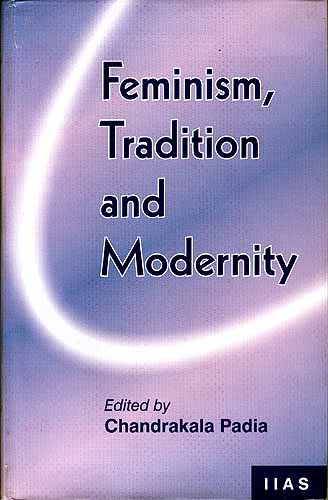
The thing about tradition, and this might shock and appall some of you neophiles out there, is that a tradition (as opposed to a new revelation) has passed the test of memetic natural selection. The longer a tradition has survived, the more evidence that it has been fit for purpose for actual human beings living in the real world of horrible jobs. Capitalist society has speeded up the process of evolution, but it's still a process of evolution. "Revolution" is simply the punctuation in punctuated equilibrium.
Hence, Chaos Marxism opposes any "Year Zero" nonsense or claims that things can appear out of nowhere with no connection to their predecessors and thus replace them. Which is why - for example - it's important to remember that Marx wasn't the first Marxist, he was the last of the great classical economists, working in the tradition forged by Adam Smith and David Ricardo. And conversely, we 100% oppose "fundamentalism" in the sense of the belief that "the original, pure message of [FILL IN BELIEF SYSTEM HERE] has been lost under useless tradition and we must restore it!" Thence comes nonsense like Wahhabism and all that "Forward to the Rebirth of the Fourth International" stuff.
... which is why Chaos Marxism opposes the efforts to "revive" traditions, or "return to the good stuff", but instead prefers to adapt existing traditions of the here-and-now to new phenomena and occurrences. You've got to build the new world with the building blocks of the old, because, as the history of colonialism tells us, simply attempting to shove a new civilisation down people's throats leads to Bad Mental Health on a mass scale.
Drama!

Interestingly enough, that's also why I've been interested in the Spartacist League and its daughter organisations. If "building the revolutionary party" was as simple as holding inflexibly to a programme last updated in 1938, then there would be far less heartbreak and brainwork involved, and you could have all the fun of the fair exchanging polemics with the OROs (the Spart equivalent of the Scientology "squirrels"). There's a darker side to that, of course - being the Chosen Ones gives you not only the duty, but the right, and more importantly the pleasure to be assholes to other people. "Error has no rights", as the traditional Catholics say.
Which brings me to the point that sometimes I find "Scientologese" jargon quite useful as shorthand. Like "ARC break" for pissing someone off, because it emphasises that such things happen when two people come to a serious disagreement on how they see the world and thus can't talk to each other properly. Here I am going to use the phrase "dramatization of case". I'm sure there's an equivalent for that in proper psychological language, though I can't think of it right now. The Marxist definition of "ideology" is "an imaginary solution to a real problem"; "dramatization of case" means "acting out past trauma or conflict in a completely different present situation". Like yelling at your girlfriend because she did something, quite innocently, which reminded you of your horrible mother.
So someone suggested on Tony Ortega's blog that Scientology is the dramatization of L. Ron Hubbard's case. This is not an original insight, but it is a good one. To give just one example, the insane bureaucratic internal structure of the Co$ is a "dramatization" of the US Navy of World War II, an organisation which Elron pretty much flunked out of. So he mocked up a facsimile of it in which he could be Commodore.
Could we also say that the Fourth International was the dramatization of Trotsky's case? After the trauma of going from Leader of the Revolution to Worst Scumbag on the Planet as far as the Communist Party of the Soviet Union was concerned, was he only trying to mock up a facsimile of the old-school Bolsheviks, this time one where he was on the winning side instead? Because let's face it, and sorry to the Trots out there because I have great love and sympathy for Lev Davidovitch, but the 4Int was always kind of a Potemkin village - the great guru, one mass party (the American SWP) and a bunch of loonies, sects, and Stalinist secret agents. Not in any way the same kind of mass forces as the first 3. And of course without Lev around the whole thing kind of crashed and burned.
Hmmm. Hubbard and Trotsky were both called "The Old Man" by their followers towards the end of their lives. I don't want to push this analogy too far because the former was a conman whose only skill was lying and he wasn't even good at that, and the other was a real revolutionary and hero howsoever flawed, but you get what I mean. In any group with an unchallenged, universally acknowledged leader, the group will more and more become a dramatization of the internal psychological conflicts of that leader. And in any group, no matter how democratic, which isolates itself from "the real world", the real fuel of the group will become its own internal conflicts.
2012-02-26
A fallow period

It makes sense, I suppose, to reformulate the aim and mission of this blog: to harmonise the languages of transpersonal psychology and revolutionary socialism, with non-dualist spirituality thrown in there for anyone who might be interested in such a thing. As I said to Sage Kiesel what seems an aeon ago, Chaos Marxism is interested in practicality above all else, and we want to develop practical insights and techniques that YOU the occupier or stirrer or picketer or NGO volunteer or political candidate or author out there at the coalface can apply to your own practice, and that of your group, to attempt to shed light on previously insoluble problems.
In many previous periods, I have suggested "audience participation" for readers of this blog, none of which have been taken up, but how about this? Go through The Aphorisms on the sidebar (or any other sufficiently wacky thing from this blog) and ask me to expand on it in depth. I'll start with the following aphorism which just came to me:
Yearning is healthy; despair is unhealthy.This assumes that we know how to tell the difference. The Sufis have the famous tale of Layla and Majnun, where hopeless, unfulfillable love is celebrated as the love of God. I suppose we can call that love of "the unknown ideal", "the Unborn Goddess" (to resurrect a stillborn meme from my back pages), or "the unfolding future of creativity". We are motivated by the drive to utopia, not by the defence of what we already have. The latter turns into the siege mentality found in all good totalitarian dictatorships and mind-control cults. It is in fact the "lesser of two evils" logic - justifying Obama's warmongering or Castro's heavy-handed suppression of dissidents because "they're not as bad as THE OTHER GUYS". Acts of suppression are always forgivable; quite often excusable; never acceptable.
On the contrary, a certain bigoted strand of atheism/skepticism/rationalism seeks to pathologise yearning for anything more than creature comforts and seeking status within the World-As-Is, the Black Iron Prison. On the contrary, the Sufis call on the disciple to "reject both worlds", i.e. both here and the Hereafter. The answer is to "seek pain" as Rumi puts it - learn to be content with the yearning, with the knowledge that reality is imperfect and always will be because it is our human nature that makes it so.
But to accept that perfection will never be ours is not an excuse to give up, but an injunction to serve perfection by trying to get there. Who knows? When we give up what Crowley called "lust of result" and abandon ourselves to the process, perhaps the Inexpressible Benevolence of the Creative Impulse will have mercy on us.
Anyway, some hilarious recent links:
- documentation of L. Ron Hubbard's large intellectual debt to, or outright plagiarism of, Aleister Crowley;
- documentation of the ongoing war of conservative-radical-modernist exoteric Islam against Sufism;
- ... and the first ever practical application of Chaos Marxist principles to actually-existing small group revolutionary socialist politics.
2012-02-08
A psychological aphorism
Further to the below on the subject of "giving oneself permission to be evil..."
Generally what we hate to see others doing most is what we want to do ourselves but don't allow ourselves to, or think we can get away with.So at the point where we recognize the antisocial impulses implanted in us by genetics and environment, we can "forgive" those of others - which, in a political sense, means rejecting moralism, the idea that there are good and bad people, and instead adopting the Bobby Sands dictum that "everyone has their own part to play".
2012-01-19
My middle name is misery
There are two primary motivations for declaring someone or something else evil:
- Enhancing the cohesion of your own group;
- Giving yourself permission to be evil "in retaliation".
Subscribe to:
Posts (Atom)