Showing posts with label aphorisms. Show all posts

2015-02-21

A small bundle of aphorisms

  • No ideas, but in things. No ideology, but in practice.
 
  • Everything that works is true. Things that don't work are either false, or countered by a greater truth. Nothing that works is false.

2012-11-01

Two new aphorisms


  1. The essence of being human is yearning for what is not; from this stems our ability to labour, i.e. to make images in our minds real things in the real world. To be satisfied with the World-As-Is (the Black Iron Prison), therefore, is to be no longer human;  while to despairing of our ability to change the World-As-Is, to bring a little of the Palm Tree Garden into it (to accept alienation, in other words) is to be subhuman. As Rumi put it, "Seek pain* and unfulfilment!"
  2. As religion is the opiate of the masses, seeking to alter-is and not-is reality is the opiate of just about everyone. "Humankind cannot bear very much reality", as T. S. Eliot put it - the outcome of reification and alienation is (for both elites and subalterns) to escape into a wish-fulfilment, magical-thinking fantasy world. As some Satanist I once read said, "magical thinking is the antithesis of magick" - denying reality (science, etc) or pretending it doesn't exist never changed it. To quote the Church of the SubGenius once again (the real one, not the unfunny plagiarist Bob Dean's cheap knockoff): "You can believe you're not going to hell, but you must first face the truth that you are in hell now."

(* The Moorcock quote in the graphic is quite accurate: the question is whether "destroying yourself" is the goal or something to be avoided. CM would suggest that the answer lies in the definition of "self".)

2012-06-29

The Secret


An aphorism:
You can't control people by violating their personal integrity. You can only control them by getting them to violate their own personal integrity. An individual finds it much harder to fight back against their own wrong acts than another's.
The Mafia knows this when it requires you to "make your bones" (kill some poor bastard) before you can join. School bullies know this when they try to provoke a reaction from their victims. Cults both political and religious know this when they break down new members' egos just so they can replace them with one they prepared earlier.

Crucially, the "toy-town Leninist" requirement that comrades publically defend a decision of The Party that they disagree with does that as well, and is a major factor in the self-perpetuating leadership of formally democratic groups such as these. As Althusser says, if you kneel in the same place and pray in the same way for long enough, you'll believe in God.

Self-concept follows behaviour, and that's another aphorism. So "fake it till you make it" works, but make sure you know what you want to "make".

2012-05-16

Reflections on "the juice"


Every "current", to use the Thelemite term - i.e. a sustainably self-replicating meme for action and living - is defined by what Robert Fripp calls "the juice", which is nothing other than life. This is to be distinguished from rules (although a current may have rules), in the sense that it is the spirit rather than the letter of the practice.

One way of telling if a current still has "the juice" is to see whether it generates Masters - that is, those who are not able to tell the letter from the spirit of the Law, but are perfectly capable of breaking the letter to preserve the spirit (thus causing the current to be reborn under a new name), and bear the terrible personal costs of doing so. So, an organisation or tradition where people simply reproduce and replicate the insights of a Master (orthodox Trotskyism or corporate Scientology) is dead, dead, dead, and only produces symptoms of brain-death and soul-death in its adherents.

A Master is able to renovate the tradition, and in some ways this may mean being able to abolish the Law in its current form. Robert Fripp closed down Guitar Craft; Brad Warner closed down Dogen Sangha International; but initates of both those orders continue to do the work, under new names. Compare this to the screams of "liquidationism!" hurled at those who suggests that revolutionaries may have other options to organise themselves than toy-town Bolshevism or Seattle-cool-person anarchism. Javad Nurbaksh renovated rather than closed down the Ni'matullahi Order, but he caused massive outrage when he declared that the Order was no longer Shi'ite, or Sunni for that matter.

But yeah, a real Current involves within it the possibility of not only producing a Master but of thereby giving birth to a new Current. The "juice" in Gurdjieff's tradition would be proved by the fact that J. G. Bennett learned from G, and then started his own branch of the work; just as Robert Fripp did for JGB; and how these guys have done for Fripp.

----

Oh, and while I'm on it:

1. The structure of the ego can be described as a Bottom Line (self-description) and Rules of Behaviour which follow from and reinforce that Bottom Line.
2. The goal of the ego can be said to be avoiding an encounter with the painbody - i.e. the "shadow" part of the ego which is repudiated and repressed.
3. What the ego hates the very most is others who do things which are most strongly against its Rules of Behaviour, and therefore most strongly repressed into the painbody. This is trivially obvious, and even a joke when it comes to homophobia and other anti-sex Rules of Behaviour, but I don't think I realised its deeper applicability until now.

2012-04-02

Aphorism on goals

If, as various spiritual traditions suggest:

1) life in this $2.99 Material World is a "game" which we consented to in the pre-life area;
2) beings adopt "pretence identities" and "substitute goals" when they feel that they've failed at the Game of Life:

then (aphorism time) the Game of Capitalism can be seen as a substitute for the Game of Real Life. As Marx said, the Game of Life (or History) only begins properly when the Game of Capitalism ends, assuming we still have an ecosystem conducive to advanced human civilisation by then.

2012-02-26

A fallow period

Quite often in my daily meditative practice I suddenly have a "cognition" or a "bright idea" and I think "HOLY CRAP must remember to post this to CM when I'm done", but then afterwards I either can't remember it or it just seems silly. It is possible that "less is more" at this stage in my publication - or, at least, an aspect of quality control enters in.

It makes sense, I suppose, to reformulate the aim and mission of this blog: to harmonise the languages of transpersonal psychology and revolutionary socialism, with non-dualist spirituality thrown in there for anyone who might be interested in such a thing. As I said to Sage Kiesel what seems an aeon ago, Chaos Marxism is interested in practicality above all else, and we want to develop practical insights and techniques that YOU the occupier or stirrer or picketer or NGO volunteer or political candidate or author out there at the coalface can apply to your own practice, and that of your group, to attempt to shed light on previously insoluble problems.

In many previous periods, I have suggested "audience participation" for readers of this blog, none of which have been taken up, but how about this? Go through The Aphorisms on the sidebar (or any other sufficiently wacky thing from this blog) and ask me to expand on it in depth. I'll start with the following aphorism which just came to me:
Yearning is healthy; despair is unhealthy.
This assumes that we know how to tell the difference. The Sufis have the famous tale of Layla and Majnun, where hopeless, unfulfillable love is celebrated as the love of God. I suppose we can call that love of "the unknown ideal", "the Unborn Goddess" (to resurrect a stillborn meme from my back pages), or "the unfolding future of creativity". We are motivated by the drive to utopia, not by the defence of what we already have. The latter turns into the siege mentality found in all good totalitarian dictatorships and mind-control cults. It is in fact the "lesser of two evils" logic - justifying Obama's warmongering or Castro's heavy-handed suppression of dissidents because "they're not as bad as THE OTHER GUYS". Acts of suppression are always forgivable; quite often excusable; never acceptable.

 On the contrary, a certain bigoted strand of atheism/skepticism/rationalism seeks to pathologise yearning for anything more than creature comforts and seeking status within the World-As-Is, the Black Iron Prison. On the contrary, the Sufis call on the disciple to "reject both worlds", i.e. both here and the Hereafter. The answer is to "seek pain" as Rumi puts it - learn to be content with the yearning, with the knowledge that reality is imperfect and always will be because it is our human nature that makes it so.

But to accept that perfection will never be ours is not an excuse to give up, but an injunction to serve perfection by trying to get there. Who knows? When we give up what Crowley called "lust of result" and abandon ourselves to the process, perhaps the Inexpressible Benevolence of the Creative Impulse will have mercy on us.

 Anyway, some hilarious recent links:

2012-02-08

A psychological aphorism

Further to the below on the subject of "giving oneself permission to be evil..."

Generally what we hate to see others doing most is what we want to do ourselves but don't allow ourselves to, or think we can get away with.
So at the point where we recognize the antisocial impulses implanted in us by genetics and environment, we can "forgive" those of others - which, in a political sense, means rejecting moralism, the idea that there are good and bad people, and instead adopting the Bobby Sands dictum that "everyone has their own part to play".


2012-01-19

My middle name is misery

There are two primary motivations for declaring someone or something else evil:

  • Enhancing the cohesion of your own group;
  • Giving yourself permission to be evil "in retaliation".
We might therefore say that declaring others to be evil is the source of all evil. Because factually there is no such thing as someone beyond the reach of goodness. Hitler loved his dog. Margaret Thatcher was on the research team that invented soft-serve ice-cream.

2011-08-18

(Doloras entered nirvana, parenthetically.)

Holy crap, for about five minutes there I didn't exist. It was COOL.

And when I came back to existing I found myself at the centre of a synchronicity storm which proved to my satisfaction that I'm doing something right.

===

All the great works of mystical literature (eg. Irina Tweedie) say that the path to ego-loss is rapid-cycling-bipolar to the Nth degree. One minute God doesn't exist and you're full of crap, the next moment you're in Paradise eating from the fruits of the tree of Knowledge of Good And Evil and Endless Free Sex, and then God doesn't exist any more, and so on. Probably enlightenment comes when you realise that both are illusions, or as Hazrat-e-Pir Dr. Nurbakhsh would say, you give up on both this world and the Hereafter.

Because God doesn't exist in the world of blind matter and inescapable natural law. In contrast, the world of Love and Meaning and Compassion and really really good orgasms and cuddles and niceness and warm milk is nothing but God. We live in the hologram caused by the overlapping of the two worlds, to use Grant Morrison's terminology which I think he took from Philip K Dick.

Aphorism time:

He who tries to defend or describe or dismiss God with Logic is committing a foul sin against Logic as well as one against God.

I notice this in the similarity of the style of arguments made by both Catholic and Salafist theologians. Religion is just rules, which is a form of cause and effect and therefore of the hard, nasty world not the sweet, gentle world. I read a website by some heretical Muslims who argue that God has actually set Satan up as temporary ruler of the planet. That might be a pretty good metaphor for describing what happens in revolutionary events... when the Black Iron Prison springs a leak and suddenly the impossible becomes possible (almost a definition of the presence of God).

Because that never lasts, and what happens afterwards is that the sweet spring of flowing nectar which existed for maybe a year or two maximum gets damned and polluted and set to drive the waterwheels of the dark satanic mills. The ekklesia, majlis or soviets of workers and soldiers' deputies become new engines of oppression. The institutions founded to guard the message end up destroying the message. And that's the price of success - having to cut a deal with the Prince of This World. Compare the umma after the death of the Prophet to the Soviet Union after the Civil War and see what I mean.

(A Persian fellow once said to me: "I'm a Muslim, but that means I submit to God, not to Muhammad." Similarly, the only real revolutionaries are the ones who refuse to argue in terms of the hadiths of Lenin and Trotsky, instead trying to emulate their spirit and daring and avoid their dumb mistakes, and whose only wish for that mausoleum on Red Square is that they should give Vlad a decent burial and stop propping him up like a grinning scarecrow.)

To be true to the spirit of the Revolution, which is precisely identical to the Holy Spirit and to what makes cats scream in the night and poets howl at the moon, we have to refuse rules, schemas, hierarchies and brain death - while at the same time refusing the opposite trap, of going back to worshipping our own egos. As Ayn Rand put it (and screw her, by the way) - "in the name of the best within all of us".

We don't need any more Prophets or idols, but we will always need idolsmashers and the Enlightened Masters who come to wake us up. But they get taken from us too early, so let's appreciate them while we have them.

2011-06-09

A new aphorism

If we can forgive without accepting, a lot more becomes possible.

"To forgive", in this context, should be understand in the same word as "debt forgiveness" - which means, nothing will change that you ran up a debt, but I waive my right to collect on that debt. It is not right that you ran the debt up, but I have decided that it's in everyone's best interest not to pursue it.

Note that we can forgive, not that we must or should. We have a choice of actions, we can pursue debts or forgive them. Which ties into the broader mystical frame that "God is both just and merciful". "Just" might mean: "everyone gets what they deserve". Mercy means: "everyone gets more than they deserve". Since we are all sinners and black sinners (or to put in secular language, we are all weak and forgetful and make mistakes), then we had better hope that others practice mercy; and indeed, an eye for an eye leaves the whole planet blind.

"Forgiving without accepting" means "exercising mercy while recognizing that it contradicts justice". In the outcome of that contradiction lies an ethical framework for a free humanity. The whole concept of restorative justice relies on precisely this question of giving the victims of a crime their own free choice as to what blend of mercy and justice should be pursued.

2010-09-10

The macro/micro problem

This blog has been in semi-retirement for a while for the simple reason that I've been in semi-retirement... from politics. When practice dries up, so should the theory, if you're any kind of a materialist. The idea is that sometime in the New Year I will reassess whether I want to get back to the front line of the class struggle and the social justice movements, or whether I want to, for example, go join a Zen nunnery for a few years.

But seriously, if there's any aphorism that I think sums up the Chaos-Marxist approach, it's from the novel Crime Story by Maurice Gee - There's not two places with a bridge between, there's only one place.. And I'm pretty sure he meant by it exactly what I mean by this whole blog, this whole way of looking at the world. In bourgeois economics, the "macro/micro" problem refers to the fact that in the neo-classical model, and the neo-classical/Keynesian synthesis which is a slightly more sophisticated version of it, the microeconomic model (of how people behave) totally contradicts the macroeconomic model (how economies and global flows behave), even though they both work in their own particular "zones".

You can argue - like you can for Marx's transformation problem - about whether this is a contradiction in the model or a contradiction in reality. (Since general relativity contradicts quantum mechanics, perhaps we should be used to "contradictions in reality" by now.) But radical politics has exactly the same macro-micro problem. Marxian economics and cultural theory, I feel, explains why the world is as it is very, very well. But it doesn't, and I don't think it can, behave why individual people behave as they do, or indeed give the individual guidance on how to live their life in the way the world is now. Various psychoanalytic and spiritual theories can do that - but because the question of "meaning" is a non-material one, they tend to contradict materialism. John Molyneux has come out and said that if you're a consistent Marxist, you have to be an atheist, period. Which only begs the question of whether, by throwing the bathwater out of God as a personal entity, you've also lost the baby of God as a component part of the human psyche essential to self-actualisation and good health. (Call it the Holy Guardian Angel, Circuit VII, the Jungian Self, whatever.)

It's always been my contention that this is the reason for the pathology of small radical groups - because the politics become a nauseating "communal dogma" when they're applied to the everyday lives of the political activists outside of political/industrial activism. Why, you might ask, should they be expected to? Because there's a "common sense" that being a Marxist / anarchist / deep green etc. is a lifestyle choice as well as a political strategy. We are all expected, really, to be sexually permissive atheists, who find meaning for their lives in "the struggle". This has not worked for me. And if it doesn't work for me, it won't work for other people, and perhaps this kind of Year Zero attitude to the warm and squishy parts of human existence is what has lead to the ghettoisation of social activism. If you insist that politics must become the driving force, the objet petit a of a political activist's life, then politics is exclusive to those who have that kind of monkish devotion.

The traditional way in which Marxists who're aware of this problem have tried to fill the gap is with Freudian psychology (Reich, Fromme, Marcuse etc.) The best that can be said for Chaos-Marxism is that I've tried something different.

2010-07-27

New aphorism

In my experience, this simple rule of thumb is invaluable in politics, psychology, and anywhere else which involves dialectical discourse:

Criticism always says more about the critic than the criticised.

(Ref: previous post on psychological projection.) If you read person Y saying "X sucks", then they may be right or they may be wrong, but what is 100% certain is that you can see clearly what person Y means by "sucks", and from there speculate about their inner life, or at least what life experiences might have led to them to adopt the reality tunnel where object X conforms to the category of "sucks".

2010-04-11

Gets you jumping like a real live wire

"[T]his revolution is necessary, therefore, not only because the ruling class cannot be overthrown in any other way, but also because the class overthrowing it can only in a revolution succeed in ridding itself of all the muck of ages and become fitted to found society anew."
- Marx, The German Ideology

"So, you see, the whole key to liberation is magic. Anarchism remains tied to politics, and remains a form of death like all other politics, until it breaks free from the defined 'reality' of a capitalist society and creates its own reality....Reality is thermoplastic, not thermosetting you know: I mean you can reprogram it much more than people realize."
- Wilson and Shea, Illuminatus!

"[P]ractitioners of the shock doctrine tend to seek a blank slate on which to create their ideal free market economies, which inevitably requires a usually violent destruction of the existing economic order."
- Wikipedia on Naomi Klein's The Shock Doctrine

"[A]ssuming daily life provides us with sufficient opportunities for appropriate & necessary learning, daily life does not provide the conditions for us to amplify & intensify educative arising-incidents, enabling us to better refine who & what we are. This refining only takes place intentionally and, usually, in carefully-designed environments. [...]
But, even were enough educative-opportunities to accidentally occur, ordinary life does not provide suitable environments for amplifying & intensifying our process, necessary & sufficient to cook us to the required degree. Different traditions & ways refer to this cooking & refining in various ways, one of which is transformation, whatever we may understand by that."
- Robert Fripp, diary of 2009/7/21.

You know something's true when not only do people keep saying it over and over again, but the ruling class manage to use it for their own effort. Simply put: when people's realities and identities are put under pressure, the impossible becomes possible. Real change only happens in transformative "leaps", which only happen under great strain and stress, or at least under artifically-induced "crucible" environments. I know, this is terrifying, heartless and illiberal. It also happens to be true.

ETA: But never let us forget the distinction that Sufis make between a state and a station. Robert Fripp's metaphor is: it is possible to take the elevator from the ground floor to the penthouse; but you probably can't afford the rent to live there. Making a change is one thing, making that change permanent is another thing altogether. My feeling is that shock and trauma and other "initiatory" experiences play a part in turning a state into a station.

2009-11-06

I STILL ATEN'T DEAD

A new aphorism for you:

Any group, religious or political, which puts its internal workings higher in priority than its intervention in the Real World of Horrible Jobs is a sect going-on-cult.

2009-10-05

Predecessors

And there I was thinking I was all unique and cool because I realised that the "activist lifestyle" was the enemy. Some French libcoms got there already 40 years ago:

One cannot help being struck by the innumerable resemblance's which bring together militancy and religious activity. The same psychological attitudes can be found : the spirit of sacrifice but also the intransigence, the will to convert yet also the spirit of submissiveness. These resemblance's extend to the domain of rituals and ceremonies : sermons on unemployment, processions for Vietnam, references to the sacred texts of marxism-leninism, the cult of emblems (red flags). Don't the political churches also have their prophets, their great priests, their converts, their heresies, their schisms, their practising militants and their non- practising sympathisers! But revolutionary militancy is only a parody of religion. The richness, the insanity, the excesses of religious projects are beyond it; militancy aspires to seriousness, it wants to be reasonable, it believes that in exchange for this it can win a paradise here below. It doesn't even achieve this much. Jesus Christ is resurrected and ascends into heaven. Lenin decomposes in Red Square.

Although the authors hilariously demolish the pomoposities of the activist culture of the time, both Leninist and anarchist, the problem was that their organisation (the OJTR) never actually managed to perpetuate itself or play a role in the class struggle. So let that be a warning - here's an aphorism for you, the only valid criticism is constructive criticism. Anyone who offers criticism without offering a practical alternative is working for the forces of inertia and despair.

Here's some other anarchists talking about the problem with the "activist lifestyle". I am particularly intrigued by an argument that "radical activist" is an identity produced by capitalist society, just like being a cop or a priest or a teacher. I suppose "Magus" or "witch" is as well - the counter-culture is always-already implicated in the dominant culture, which of course could be seen as a source of strength and connected, if "activists" and "magickians" weren't too busy trying to persuade everyone that they were speshul li'l snowflakes.

2009-09-09

Good advice

... spiritual life is exactly like everything in nature. It's subject to the law of nature. There is a tide like the tide in the sea, like the day and night. There is tremendous nearness to the Beloved, and the soul is happy, and we are walking on clouds, and then suddenly there is nothing there. You are suspended naked over a chasm or an abyss, you can't pray and God doesn't exist and everything is cold and everything is horrible... This is the path of the mystics.

- Irina Tweedie. Substitute "the Revolution" for "God" and this paragraph should look familiar to our secular Marxist readers as well. The test is whether you give up when it looks like everything's turned to shit. But there's a subtler trap - the trap of "well, maybe what I've been doing hasn't worked, so let's do something else." That way lies spiritual and/or political dilettantism, jumping on whichever bandwagon seems interesting at the time.

The important question is: regardless of success in the real world, is your group as a group working? If you've got a good political party, or tariqa, or affinity group, stick with it because groups can do things individuals can't. You might waste a lot of time and energy trying to affiliate yourself to a new guru, only to find out that you actually brought the problem with you.

2009-08-18

An excellent aphorism

Despair is a black leather jacket that everyone looks good in. Hope is a frilly pink dress that exposes your knees.


- Rebecca Solnit. As all Catholics know, despair is a mortal sin, and as all vegans know, so are leather jackets. Don't read the rest of the article, though, it's too depressing.

2009-07-27

Reiteration, or: Back to politics

Principle number one of Chaos Marxism is that, when understood properly, revolutionary Marxism proposes a reform of consciousness on a collective, social and planetary scale that transpersonal psychology / mysticism / magick proposes on the individual or small-group scale; and that a way of understanding that makes these two horses run as a team is a vital step in the struggle for the liberation of this species. But don't take my word for it; read a couple of recent articles by people on the cutting end of Marxist thought:

Instead of putting emphasis on introducing theory into the workers’ movement, in worrying especially about theoretical formation, we ought to be very creative in taking advantage of or creating situations that allow people to learn through practice. - Marta Harnecker


Real, liberatory reform of consciousness can't happen on an intellectual, book-learning level alone - generations of Gnostics and Sufis would agree with Rosa Luxemburg, who said "You cannot learn everything from pamphlets, it is necessary to carry out a process of learning through practice." The reason Marxism has been slowly dying for seventy years or more is that the cutting intellectual wave was Trotskyism, a tradition which made up for practical impotence by building ever more elaborate fantasy theoretical structures. (Absolutely no disrespect to Lev Davidovitch intended, only to his idiotic acolytes.)

Marxists have to learn that a rationalist, scientific thought structure cannot understand, let alone resolve, deep psychological barriers based on a lifetime of living in the heart of the MACHINE. Sure, people change for the better during revolutions, but Petrograd 1917 didn't make the entire working class enlightened overnight - and it would be even worse now that corporate propaganda is so much more efficient and persuasive, as Michael Löwy understands:

How to distinguish the authentic from the artificial, false and makeshift needs? The last ones are induced by mental manipulation, i.e. advertisement. The advertisement system has invaded all spheres of human life in modern capitalist societies : not only nourishment and clothing, but sports, culture, religion and politics are shaped according to its rules. It has invaded our streets, mail boxes, TV-screens, newspapers, landscapes, in a permanent, aggressive and insidious way, and it decisively contributes to habits of conspicuous and compulsive consumption. Moreover, it wastes an astronomic amount of oil, electricity, labor time, paper, chemicals, and other raw materials - all paid by the consumers - in a branch of "production" which is not only useless, from a human viewpoint, but directly in contradiction with real social needs. While advertisement is an indispensable dimension of the capitalist market economy, it would have no place in a society in transition to socialism, where it would be replaced by information on goods and services provided by consumer associations.


Again - any Sufi could tell you the difference between the needs, wants and compulsive desires of the false self, the Ego, the "special and unique snowflake" which is in fact an extension of THE MACHINE, of the memetic apparatus of control and manipulation; and the real longings of the body and soul, which are an extension of God-However-Defined. Imagine what might be possible in a world where the social forces of culture and persuasion were under the democratic control of enlightened beings, as the spiritual master brings his/her ego under the control of the more holy parts of the personal. Imagine if the Demiurge repented and learned to serve Sophia. As below, so above, in spades.

But conversely, the faithful and the psychonauts have to understand that capitalism as a concrete set of social relations, and the ideology/mythology/culture/meme complex associated therewith, pretty much ensures that most of the planet will remain in ignorance, squalor and self-hatred when they don't have to. Elitism is dead. In previous eras there might have been an argument that only a minority could achieve enlightenment or altered states. And that was because there was a limit to how many people could have that much leisure time and freedom from the needs of biological existence. Spiritual elitism is no longer needed for exactly the same reason that poverty, disease and lack of education are no longer needed. Anyone who tells you that "the True Path" is only open to a special minority of people, and most people can only hope for being happy, well-fed animals or slaves at best, is not your friend, or the friend of humanity, no matter how much else they might have going for them.

The great paradox, or contradiction of modern capitalism, is that it has memetically enslaved us at precisely the same time that it has created all the physical requirements for our total liberation as a species, or even as a biosphere. There is really nothing holding us back now but "the subjective factor" - our mental chains. One huge problem is that existing radical groups, at least in the Western quasi-democracies, are treating their politics as a religion or a lifestyle. The absolute last thing they would want was to leave their identity as "rebels and outcasts" behind, and join hands with a victorious mass movement.

I am not sure that I have anything original to add to this theoretical mix. My job is probably just to point out the connections, and then see what people (including me) can make of them in practice. Is there even anything that CM can offer to actual political practice? Or is it just "transpersonal psychology and spirituality for dialectical materialists", or an argument for gnostics to take Marxism seriously?

2009-07-08

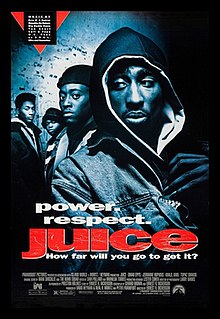
The "Juice"

One of the insights that is the real beginning of wisdom is that rewards do not go to the deserving, in this world at least. The Hollywood megastar is quite possibly a shit actor, and of course the big bands are probably not nearly as good as, say, your own band. Once you realise that the universe does not work that way, you can stop gnashing your teeth about it.

But more pertinently, why do certain creatives get swept along on the path to fame and fortune? Marxist economics is superior to bourgeois economics because the former treats value as a real, tangible thing, intimately related to labour, rather than a totally subjective phenomenon which you can track with superstitious nonsense like "marginal utility functions". One of the basics of Chaos Marxism is that we want a real Marxist cultural/psychological/memetic science, not the obscurantism of po-mo cultural studies or the black alchemy of PR/advertising. So we need to discuss - is artistic value a real thing, like use-value and exchange value are?

Let's toss that "eye of the beholder" stuff out the window immediately. Of course, G. I. Gurdjieff also talked about the concept of "objective art", so that's a clue that we're onto something here. T. S. Eliot - whose stuff I love even though he was an awful reactionary - said that "all great art is impersonal". Let us put it into the language of Chaos Marxism this - "objective art", for us, is art which enables a real psychosocial/memetic current to reveal itself in the Real World of Horrible Jobs. This is totally distinct from "self-expression". Who the hell cares about whatever your emotions are? Unless your emotions are shared by everyone and you've just found a way to put it into words, sounds, images, whatever. Then you're cooking with gas, as they say.

That's not as mystical as it sounds. It's a commonplace that great art and great social movements go together. Beethoven's Fifth and Ninth sum up everything that was grand about the world in which the French Revolution could happen. Similarly, why do you think rock music reached perfection in 1975 (or 1969 if you're an awful hippie?) Because after the mid-70's the social current which it embodied - the radicalised middle-class youth of North America and Europe - ran out of steam, or got bought out. Same with US hip-hop in the early 90's.

It's time we got serious and precise about what we mean by "current". This isn't some kind of metaphor we're working with. It is essential to Chaos Marxism that a "current" in the Crowleyan sense corresponds to real social forces in the real world. And one current (at least) is the version which, if we grab hold on it, leads to the better world to come in which humanity fulfils its destiny and brings itself to an end properly, rather than killing everyone or just bumbling along doing the same crap forever. Humanity is a process that can either finish (when something is lost), conclude (in which nothing will be lost or won), or complete (which will mean a new beginning). Chaos Marxism wants to surf that last mentioned wave.

That triad of terms up there is, like a lot of stuff on this blog, swiped from Robert Fripp and Guitar Craft (aka the Fourth Way applied to the acoustic guitar). Fripp brought about GC because he felt it necessary to combine the Greater Work of evolving the individual personality with a Lesser Work of bringing music into the world. He has made the point repeatedly that, when a huge heavy Current like we've been talking about above hits the world, it will find people to express itself through, and if those people aren't ready for it, tough. They will get burnt the fuck out. Why did all those rock stars die or go massively crazy 1966-71? Fripp says, because their human personalities just couldn't handle it when something big started speaking through them. It is up to the reader to decide whether this is what happened to Aleister Crowley. (Something similar has of course always happened to poets and artists through history - especially the really good ones.)

So - Chaos Marxism's pretensions to a cultural science will be fulfilled when we learn to predict exactly where and when the Current of the Next Era will hit, in not only political but cultural, artistic and even sexual forms. Our Lesser Work is to be able to express it in this world and to help others to express it - our Greater Work is to prepare ourselves so it won't fuck us totally up. This is not idealism. "Currents" do not exist separately from actual physical human consciousness expressed in actions, words and cultural activity. But Marxists who talk about "reformism" (for example) as if it were an actual real thing that needs to have battle done against it should have no problem, in theory, with the concept that the post-capitalist future begins to reveal itself in embryo every time a crack in the system appears, and that we can begin to predict how it will take shape in not only political and economic but cultural form.

The big problem we have to fight against, sadly, is Marxist philistinism - the idea that art and music only matter when making agitprop for whatever the revolutionary cause of the day is. By those standards, Beethoven's Ninth sucked because you couldn't chant it while marching in the Napoleonic Wars.

2009-06-17

...but first you've got to THROW IT

Your willpower, or intent, is like a boomerang. Project it the wrong way, and you will waste time and energy. Project it the right way, it will come back to you and you will have a gain in results for a net zero in expenditure. If you're losing energy, feeling run down or wasted, you should ask yourself whether you have any "open-ended" commitments, things that drag on forever with no clear way to end the cycle and get your boomerang back. Then, figure out how to put an end to them properly.