Showing posts with label poetry. Show all posts
Showing posts with label poetry. Show all posts
2013-01-04
New directions for the New Year
Language is a virus. The ego is a meme*. "The world flows through us." Most of what we do starts long before the left-brain language centres decided to make up a good excuse for it. The "unconscious" is that left-brain inventing someone else to blame for actions which don't fit within its own self-image, which have their sources in the Real World of Horrible Jobs. When the left-brain shuts down or is bypassed (stroke, dreams, drugs, spiritual/psychic practices, brainwashing, art), then you begin to see how "thermoplastic" your personal reality is. But corporate psychotherapy / self-help is all about you paying to adjust your reality so it's closer to theirs.
David Smail got there first. Hello, comrade.
* I picked this up from a book on post-Kantian philosophy, and it was so obvious and confounding that I was amazed to find out that only those wacky Grant Morrison fanboys at Barbelith had got there first. But it is here that social-materialist psychology agrees 100% with non-dualist spirituality. "YOU ARE NOT REAL". You cannot fix your world from a position of "I". In Truth and Love, there is no I and thou.


2012-07-23
Chaos Marxism in 1844
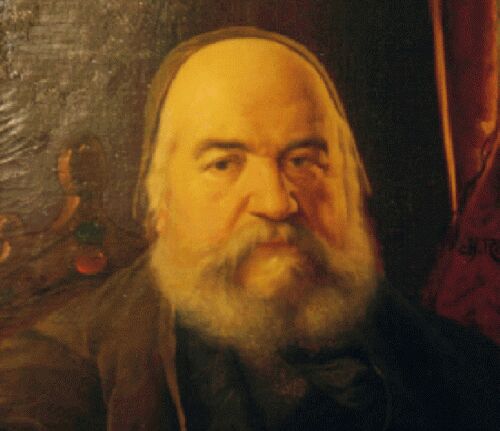
In 1844 we find Engels writing... a letter to the editor defending an "author of several Communist books" - Abbe Constant, who, under the name he later adopted - EIiphas Levi - would become the most renowned of French occultists.
Constant was a close friend of pioneer socialist-feminist Flora Tristan, whose Union Ouvriere (Workers' Union, 1842) was the first work to urge working men and women to form an international union to achieve their emancipation. One of the most fascinating personalities in early French socialism, Tristan was given a place of honor in The Holy Family, zealously defended by Marx from the stupid, sexist gibes of the various counter-revolutionary "Critical Critics" denounced throughout the book.
That Constant became a practicing occultist, and that he and Tristan were for several years closely associated with the mystical socialist and phrenologist Simon Ganneau, "messiah" of a revolutionary cult devoted to the worship of an androgynous divinity, reminds us that Paris in the 1830s and '40s was the scene of a remarkable reawakening of interest in things occult, and that the milieux of occultists and revolutionists were by no means separated by a Chinese wall. A new interest in alchemy was especially evident...
To what extent Marx and/or Engels encountered occultists or their literature is not known, and is certainly not a question that has interested any of their biographers. It cannot be said that the passing references to alchemy and the Philosophers' Stone in their writings indicate any familiarity with original hermetic sources. We do know, however, that they shared Hegel's high esteem for the sixteenth century German mystic and heretic Jacob Boehme, saluted by Marx in the Rheinische Zeitung in 1842 as "a great philosopher." ...
One of the things that may have attracted them to Boehme is the fact that he was very much a dialectical thinker. Dialectic abounds in the work of many mystical authors, not least in treatises on magic, alchemy and other "secret sciences" and it should astonish no one to discover that rebellious young students of Hegel had made surreptitious forays onto this uncharted terrain in their quest for knowledge.
This was certainly the case with one of Marx's close friends, a fellow Young Hegelian, Mikhail Bakunin, who often joined him for those all-night discussions at Proudhon's. As a young man the future author of God and the State is known to have studied the works of the French mystic, Louis Claude de Saint-Martin, "The Unknown Philosopher" and "Lover of Secret things" as well as of the eccentric German romantic philosopher, Franz von Baader, author of a study of the mysterious eighteenth-century Portuguese-Jewish mage, Martinez de Pasqual, who is thought by some to have had a part in the formation of Haitian voodoo (he spent his last years on the island and died in Port-au-Prince in 1774), and whose Traite de la reintegration is one of the most influential occult writings of the last two centuries.
Mention of von Baader, whose romantic philosophy combined an odd Catholic mysticism and equally odd elements of a kind of magic-inspired utopianism that was all his own-interestingly, he was the first writer in German to use the word "proletariat"- highlights the fact that Boehme, Paracelsus, Meister Eckhart. Swedenborg, Saint-Martin and all manner of wayward and mystical thinkers contributed mightily to the centuries-old ferment that finally produced Romanticism, and that Romanticism in turn, especially in its most extreme and heterodox forms, left its indelible mark on the Left Hegelian/Feuerbachian milieu. Wasn't it under the sign of poetry, after all that Marx came to recognize himself as an enemy of the bourgeois order?
(from Franklin Rosemont, "Karl Marx and the Iroquois" - available at our old buddy Ben Watson's newest insane project.)
2012-05-14
Poetry in motion

Poetry is where art, language and the unconscious mind come together and have dirty, dirty sex. (No, that's not an Aphorism). So the question of "true poetry" - defined by Robert Graves as the kind of words that make your hair stand on end, words that have inherent meaning in their sound and rhythm as well as their denotative meaning, where the signifier is itself a signified - is very close to the questions we pose on this blog of depth psychology, practical memetic warfare and "changing one's mind" in the literal sense of the term.
Robert Graves claimed in his seminal (or should that be menstrual?) work The White Goddess that "true poetry" was indistinguishable from the True Religion, which was (in his estimation, based on well-meaning pseudoanthropology which was in fashion of the time) the cult of the Mother Goddess and her twin son/lovers expressed in the seasonal cycle. The initiatory tradition of this sacred poetry, he argued, was alive and well in the Welsh and Irish bardic colleges, among others, but had been lost and driven underground by Christianity. He set himself the goal, in his book, of recreating the basis of that tradition, although he expressly said he didn't consider himself qualified to draw any practical conclusions from it or to start initiating people himself. (Nonetheless, Sylvia Plath and Ted Hughes apparently had a little domestic cult of the White Goddess going, in which case, Sylvia should have killed Ted instead of the other way around.)
You see, that's the big problem with neo-Paganism. The initiatory tradition of the Western Indo-European Mysteries was broken and a soufflé doesn't rise twice no matter how much wishful thinking you put into it. I spent ten years in that tradition so I know what I'm talking about. Oh, Gerard Gardner got some fragmented folk-magic rituals, jazzed it up with some Crowley and some S&M and started his own ritual lineage, with blackjack, and hookers. But does it have the "true poetry"? Not being a Gardnerian intiate, I can't speak for them, but for me, all the reconstructed paganisms - or like most traditions of Wicca, the ones who claim to be reconstructed - lack it. I can explain this no better than in the words of Leonard Cohen: "A scheme is not a vision / and you never have been tempted / by a demon or a god".
In the absence of a formal intiatory Tradition which still maintains "true poetry" - or what Robert Fripp calls "the juice" - all you have left is what Sufis call an `Uwaysî initiation, i.e. Goddess Herself comes down and taps you on the shoulder and you say me? the chosen one? and I didn't even graduate fuckin' high school. And there's no way you can make that happen, although you can prepare for it just in case. I would say that the paths of modern cults like Discordianism and SubGenius suggests that "the juice" was at least there for a while, and maybe still is, who can tell.
However, in my own personal life, I got tired of waiting for the tap on the shoulder and ventured outside my own cultural background into an intact (although suitably modernised) initiatory tradition. Which brings up the question of how Marxists etc. should react to Burkean arguments that boil down to the idea that "Tradition is like natural selection, it's there for a bloody good reason". Lenin and Trotsky were adamant that there would be no Year Zero, you couldn't start human culture from scratch, that we should take the good bits out of Bourgeois Tradition. So how would Tradition balance with the free creativity of the masses under Full Communism?
I should close with the observation by Hooman Majd: "Not every Sufi is a poet, but all the great Iranian poets were Sufis". And Robert Graves certainly covers Persian poetic lore in his magnum opus. I stopped writing poetry about ten years ago because I got the idea that more people would listen to it if I set it to an electronic beat, but perhaps I need to go back to the purity of the words.
Subscribe to:
Posts (Atom)